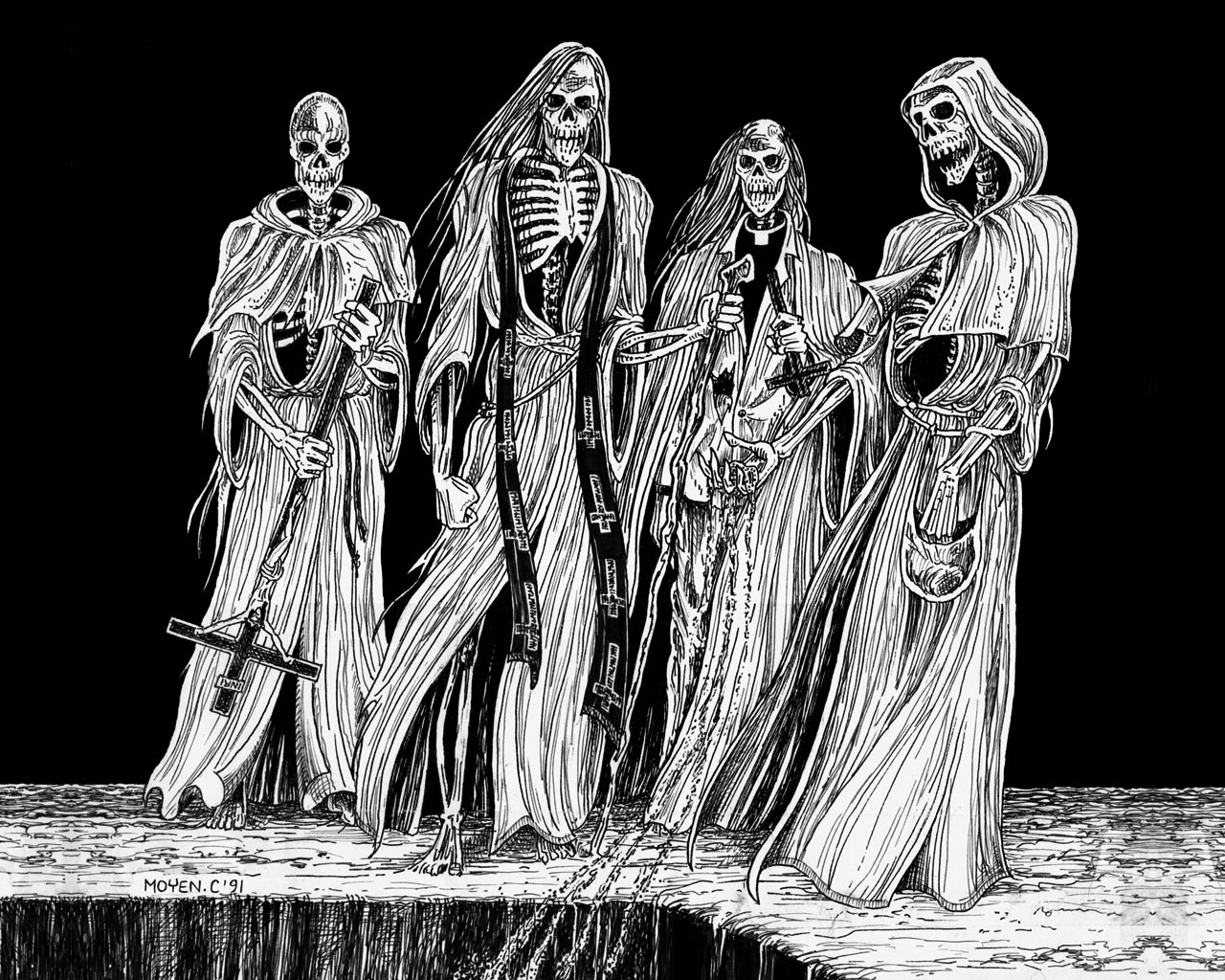
With the "Death Sweat Doom" TPK of the party in my Sea of Spices OD&D game I spontaneously decided to immediately jump to the next game I want to DM, the feudal far-future space fantasy adventures of the Pluton Zone, inspired by Jack Vance and Dune and powered by Humanspace Empires.
When I say inspired by Dune, I mean inspired by Dune and fake-Dunes. The Lynch movie. The never-happened Jodorowsky Dune. Metabarons.
I'm talking about space psychic martial arts stuff here. Jedi shit.
While riffing on the tantric new-age future of Humanspace Empires, where a significant portion of the Tamil-descended adventuring population possesses psychic abilities, the thought occured to me that of course these space dudes practice yoga; that in fact pretty much everyone in Humanspace Empire practices magic space yoga.
Now I don't know much about yoga, but it seems that a RPG skill based on my bizarre pulp adventure concept of yoga could be a pretty kickass and useful skill for the right game.
Need to hold your breath until rescue arrives? Make a yoga roll.
Need to stand on top of a pole for days? Make a yoga roll.
Need to quickly recover your magical potency? Make a yoga roll.
Need to contort your body to fit through a cat door? Make a yoga roll.
Need to sexually impress someone? Make a yoga roll.
Also: My back wasn't hurt on Friday either ;P
Showing posts with label Empire of the petal throne. Show all posts
Showing posts with label Empire of the petal throne. Show all posts
Monday, April 4, 2011

Wednesday, March 16, 2011
The Sea of Spices - Chapter I, Part III
Kasem Somchai dashes through the pyramidal monoliths, both graven with the form of a powerful looking man, with his back to the viewer, wearing an elaborate witch doctor's head-dress and somehow with his arms outstretched holding back a loathsome vague slug-like shape, stumbling onto a black stone platform, a landing, over the edge of the titanic blue-lit pit before him. Almost toppling over the edge, he desperately swings his arms to regain his balance and somehow, through the instinctive reaction to the sudden peril of a calamitous fall, breaks the mesmerism that has overtaken his consciousness and regains his senses, fully lucid.
Looking around he sees a wide basalt staircase plunging from one side of the landing he is standing upon, horribly worn, descending at a steep incline down the side of the pit. His companions catch up and they all stare in awe at the vast glowing void wondering if the other ensorcelled Henchmen had ran heedless off of the platform into the blue abyss before them?
The situation is discussed and the party begins cautiously descending the staircase, alert and clenching bared weaponry. After 2,000 small, tall, steep steps the stairs come to another landing before reversing course in their descend down the sides of the cyclopean shaft. A narrow aperture gapes in the pit-wall adjacent to the landing, with graven forms in the stone on either side, the same powerful witch-doctor as on the monoliths above, but this time facing the viewer and wearing a face-covering cowl that bares fierce eyes and its palms up and out as if holding something back.
As the party discusses whether to further descend gibbered whimpering is heard from withing the dark portal in the shaft-wall. Zusander, with his skills in languages and translation makes out pidgen words for "Please," "Help" and the like. Inquiries are made and the unseen speaker begins begging in Common "Please take me from this bad place; Please protect me from the wicked ones below."
The companions further discuss their options at length before torch-light is cast into the aperture, revealing a short, narrow tunnel with a prone man at the end, clad in orate Ankhor mail with a round-shield bearing the bas-relief of an elephant's head and a sheathed bolo-sword at his waist. Although he had the frizzy hair and almond complexion of the islanders, his eyes and facial features belied Ankhor ancestry.
The man, and adventurers named Nodcal, explains that he and his Sindhu dwarf companion, Sufru, had descended into the pit seeking gold; they found many abandoned strange huts before night fell and several ghostly bad men emerged chanting wicked black juju. Sufru fell under their spell and wast entranced, but as Nodcal fled they brushed him with their fingers and sucked his vitality, draining him of his strength. He was able to ascend this far before collapsing from exhaustion and dragging himself into the alcove.
Nodcal begged the party to descend and rescue Sufru, but the party refuses and instead conveys Nodcal back to their vessel. The journey through the jungle is uneventful, aside from placid orangutans and an arm-sized leech attacking a Henchman, but Nodcal recovers no strength and requires the aid of two men to walk.
The party weighs anchor and sails for the southern village, delivering Nodcal to their witch-doctor; the half-Ankhor adventurer presents them with a purse of 3,000 worn shiny coin-like flattened lumps of gold. Speculations are made regarding what else he had been carrying while helpless and in their power.
The party feasts, rests, and under the pretense of "hunting" begins navigating an indirect route through the jungle for the mist-shrouded middle mountain of the three looming above the jungle inland from the village.
Monday, March 14, 2011
The Sea of Spices - Chapter I, Part II
The party returns to the Salty Voyager and settles their nerves after the shocking jungle episode. The next morning they return to the pond carrying a rowboat from their xebec. They use a complicated scheme to ferry all of the adventurers and retinue to the pile of crumbled black ruined stones in the center of Nushnos' death lake.
The islet is searched, and although Amarath the Scholar ascertains that it is indeed the ancient remains of some ruin that they are standing on, no entrances, passages, chambers, shafts or treasures are found. Zusander strips to his scimitar and dagger and dives several times to the bottom of the pond, but also discovers naught; the party returns to their vessel and rests another night.
The next morning they set out for the mountain rising above the jungle; for two days they slash and tread and sweat and drudge through the thick undergrowth and choking lianas, encountering naught but occasional placid family groups of orangutans. By the evening of the second day they have reached the rocky base of the vegetation encrusted mount and while searching for a campsite they discover an ancient road of worn black stones in the jungle, heading directly for the mountain. There are intermittent piles of crumbled basalt slabs alongside the road which the Scholar Amarath identifies as the vastly ancient remains of buildings.
As twilight sets in the party makes camp alongside the black road but are disturbed by the sudden sussurus of ghostly chanting whispers coming from the mountain above accompanied by a vast vertical shaft of shimmering blue light thrusting up into the night sky from a spot on the lower reaches of the mountain, with the road pointing directly at this ghastly illumination.
The Physician Asem Somchai, the Fighting-Man Ulnoc, and the Henchmen Hanamandu, Modibi, Sabmon and Fulompha begin running down the road towards the blue shaft of light upon the mountain, ignoring the calls of their companions. Zusander grabs Mobidi's arm and tries to overpower her but after she begins pummeling him he lets her twist out of his grasp and rush after the others.
The party attempts to chase their apparently mesmerized compatriots, but all of the ensorcelled dashers aside for the mail-clad Asem Somchai are able to outpace the party. Fearing further violence if they physically interfere with the Physician they instead follow him.
An hour later Ulnoc comes to his senses while dashing down the dark road leading steeply up the mountainside; he attempts to stops Fulompha but she soundly ignores him so he instead turns around and begins jogging down the slope, soon coming across the Ankhor Physician followed by the rest of the un-mesmerized adventurers and Henchmen.
The party continues following Asem as he dashes up the steep mountain road, and an hour later they come upon the source of the massive shaft of blue ghost light; upon a small ledge or plateau in the lower reaches of the mountain, the ancient road leading up to it, is a vast circular pit, from which the beam of light emerges. Two monoliths, resembling vertically elongated pyramids, stand close together where the road intersects the pit, one of each side of the terminus of the paves, with Doctor Asem Somchai dashing straight towards the point between these two markers...
Sunday, March 13, 2011
The Sea of Spices - Chapter I, Part I
The Cast:
Amaranth, Kumarikantam Magic-User and Scholar
Doctor Kasem Somchai, Ankhor Cleric and Physician
Nushno, Sindhu Fighting-Man, Step-Brother to Zusander, and his henchmen:
- Sabmon (Cleric), Fulompha (Sorceress), Euvero (Fighting-Man) and Ulnoc (Fighting-Man)
Zusander the Tiger, Sindhu Fighting-Man, Step-Brother to Nushnos, and his henchmen:
- Clodius (Iskander Fighting-Man), Faruza (Sindhu Fighting-Woman), Hanamandu (Kumarikantam Fighting-Man) and Modibi (Sindhu Priestess)
&
The Salty Voyager, Sindhu Xebec
Nushno and Zusander, step-brothers that hated each other, shared an adventurer-uncle, Abheems, who told them tale, of a mist shrouded mountain, the middle of three, looming above Snake Island, west of Dread Island and north of the port-island of Amphorae in the Sea of Spices. This uncle spoke of tales and maps and of the treasure horde of an ancient lost empire sequestered within a hidden temple upon said mist-shrouded mountain before setting out on a expedition to recover these treasures.
Uncle Abheems was never heard from again.
The the intervening years the brother grew to despise each other further, while emulating their uncle by pursuing lives of wandering adventure. Nushno gained a second enemy to his step-brother when both he and a Kumarikantam Scholar-Sorcerer pursued the same woman, only for both to earn her scorn for their competitive efforts.
This Scholar was Amarath, an adventuring companion of the Ankhor Physician-Priest Kasem Somchai, the two of whom has been inseparable companions since they saved each others lives on a disastrous expedition where the rest of their companions expired.
Before the aforementioned expedition, Doctor Kasem Somchai has served a term of hard labour in the gaols of a cruel Vizir with Zusander the Tiger, where the two of them banded together for mutual advantage.
Years later the two rival step-brothers grudgingly decide to work together and go after their missing uncle and the treasure horde he was seeking. Zusander brings along past ally and cleric Kasem Somchai and the Sage-Sorcerer Amarath to bolster the party, and Nushno is dismayed to see that the "help" that his step-brother has obtained includes a former romantic rival.
The party pools their resources, the step-brother gather their henchmen, and they all commission an adventurer-captain and lease a xebec before thrusting out into the vast reaches of the Ouroboric Oceans into a harrowing journey to the Sea of Spices.
Much later the vessel floats alongside the western coast of a large jungle isle, according to their navigation Snake Island. Four mountains thrust out of the lush greenery, one to the north, and three closely clustered together to the south, the middle of which is shrouded with thick gray clouds. In the initial scout of the coast two hut-villages are spotted, one below each two mountainous regions, with a distance of 50 miles separating the villages along the coast.
The party sails into the harbor of the southern village; the villagers are friendly and their chief greets the xebec from a dugout catamaran, making welcomes and inquiries of cargo. Zusuander makes of gift of a vial of perfume which impresses the chieftan greatly, other sundries are gifted, and the party is feted with roast pig, fruit, arrack, and gracious hospitality. They notice that the boulders scattered about the village appear to be the remains of ancient architecture, and that the harbour, apparently natural, seems to be artificial albeit of extreme antiquity.
The next day the party speaks with the cheiftan and witch-doctor, and when inquiries are made of the mist-shrouded mountain they are informed that it is taboo and forbidden. The party sets sail for the northern village, consisting of grass huts on wooden platforms and barges of reed-bundles, and again gifts of "cargo" are made, this time a block of incense impressing the chieftan. The people of this village wear many pieces of rude gold jewelry, which piques the parties interest.
They inquire of the mountain looming above this village and learn that long ago a wicked tribe lived in a village inside the mountain and performed black magic upon and enslaved the people of the island. Eventually the mighty sons of gods saw fit to stop this tribe, and punished them for their wickedness and imprisoned them within their mountain.
Nowadays people stay away from that mountain, and those that hunt too close to it often disappear. The party agrees that is seems wise to stay away from the mountain and asks about the gold jewelry. They are told that the jungle is full of the weathered rubble of ancient ruins, and that sometimes hunters find trinkets or amphorae under rocks or within the burrows of capybaras; after many years the tribe has accumulated many trinkets. It is said this gold comes from when the wicked tribe of the mountain was struck down, the jewels of those that were slain in the jungles.
The next day the party sails north-east along the coastline for a few hours to a spot north of and close to the mountain and anchored in a sheltered harbour. The party decides to search the jungle for a few hours and seek out some of this gold. After an hour they stumble upon a small group of orangutans, who placidly munch on forage while watching the party. The party continues searching the jungle and in the darkness beneath the jungle canopy, among the singing, chattering and screeching of birds, monkeys and insects, sweltering in torrid humidity, they find a stagnant black pool with a tumbled pile of black rocks resembling the shattered stone ruins of a small step-pyramid squatting in the center of the pool amidst the poison-green floating vegetation, only a few shafts of sunlight piercing the canopy above to illuminate a few slime-encrusted boulders among the rotting edge of the islet.
The party discusses investigating this ruined pile for gold; the Sindhu step-brothers Zusander and Nushno are both trained and skilled swimmers and divers, and the two resolve to see if they can wade to the islet. The cautiously step into the waters, the much sucking at their feet; at about a third of the way to the black rocks, about thirty feet from the shore, the waters reach above their waist. There is a sudden explosion of white foaming water and blackened green scales; a massive crocodile lunges out from the deeper waters, grabs Nushno within its jaws, and disappears beneath the suddenly blood-slicked and still waters.
There is a shocked silence as the birds, monkeys and insects still their cacophony before Zusander begins slashing with his scimitar through the murky waters, but to no satisfaction.
He staggers out of the slimy pond to rejoin his stunned companions; Nushnos' former flunkies discuss their situation, and at the urgings of the Sorceress Fulompha, Ulnoc is nominated as the new leader of this particular knot of henchmen. Meanwhile the rest of the party speculate on how suspicious this tale will sound to the family of the rival step-brothers, "Nusho went on a sea voyage with a former romantic rival, his hated step-brother, and someone that his step-brother met in prison; they go into the jungle and than he gets killed by a crocodile that disappears with his body..."
Tuesday, March 1, 2011
My Favorite "Example of Play" Courtesy of MAR Barker
Player : (After considerable argument) "Person number two is carefully reaching out with the point of his spear. He pushes just one coin off the altar toward himself . What happens?"
Referee : (Laughing fiendishly) "That's all it takes to set off the trap. A great metal cage falls clanging down over all of you. I believe you were all up near the altar - nobody specified leaving any of the party behind to guard the door, and I thus assume you were all within the 20 foot square area covered by the cage. (Rolling percentile dice, giving the party a 20 percent chance to have had one or more stragglers outside the cage area - none were). When the cage falls, you also see that the idol on the altar begins to arise. What you thought was its metal surface was actually its armour. At the same time secret doors in the north and south walls also swing open, and fifty smaller versions of the idol file into the room expectantly. You have now encountered the Demon Kurritlakal, the Cracker of Bones, Eater of Skins, Father of One Thousand Progeny, Spawn of Great Durritlamish . . . "
- Empire of the Petal Throne - The World of Tekumel, page 102
Tuesday, November 30, 2010
Blair's Big Dumb Planet Algol Megadungeon
Apologies for the lack of posting lately, I've been sick and somewhat run down. Work and illness have been interfering with my gaming, and the latest Fallout installment has been sucking up a lot of my attention as well.
But I've been a doing a bunch of work on my Algol megadungeon. At this point, I have the following mapped out:
Level 1 - 143 rooms
Level 2 - 144 rooms
Level 2.B - 39 rooms
Level 3 - 82 rooms
Level 3.B - 9 rooms
Level 3.B.3 through to 3.B.7 - 34 rooms
Level 4.A - 28 rooms
Level 4.B - 22 rooms
Level 4.C - 22 rooms
The level labeling system is kind of funky right now; the oddball named levels are sub-levels or sub-complexes within the megadungeon. Of course there are byzantine interconnections between the levels.
I've paid attention to the erudite Gabor Lux's past works analyzing dungeon construction and flow, and the big levels are designed with that in mind by incorporating "loops" within the dungeon avenues. In effect there are several "neighborhoods" within each main level, as well as "freeways," complexes of corridors that allow one to travel throughout much of the differing areas of the level without having to deal with doors or major barriers; thereby allowing the giant worms and flying jellyfish means of traversing the dungeon.
A big influence has been Empire of the Petal Throne's Underworld and megadungeon innovator M.A.R. Barker's work. For my own game, one of the tentpoles of the megadungeon monster stocking will be from D&D variant EPT. The other three tentpoles being Carcosa, Arduin and the original Fiend Folio (including White Dwarf FF content), with some cherry picking from Talislanta. In any published version most such critters would be replaced with original or OGL content, but in my own game I get to use Gorbels without turning them into little exploding, clinging toddler-robots first.
As an aside, I've read previous online musings about using the Fiend Folio as an alternate Monster Manual instead of the aforementioned MM, and I have to say, I can see it working. There's definitely a nice range of humanoids in the kobold-equivalent to ogre-equivalent spectrum. Plus, forget everything you know about Gibberlings and read them with through a pulp Swords & Sorcery lens.
I'm going with a sparse monster distribution, with 1 "encounter" for every six rooms or so; with allowances for some encounter groups controlling several rooms. The general vibe I'm going for with this aspect is vastly ancient, abandoned decrepitude punctuated with moments of terror. With pockets of really bad areas.
At the 1-to-6 monsters placement-to-room ration, it works out to 24 monster encounters for the first two levels...which is quite a lot, and leaves me with a lot of room on my plate for the Tekumel/Arduin/Carcosa/Fiend Folio buffet...
Wednesday, June 2, 2010
Further Musing on the Tekumel Underworld Feature Table
I've been thinking about that Tekumel Underworld Contents Table I posted a couple of days ago.
Although it is presumably for usage in a Empire of the Petal Throne campaign, the contents seem eminently useful for bog-standard vanilla fantasy, as well as weird gonzo fantasy. I really dig how the table is organized along the lines of traditional D&D "dungeon levels."
Let's start with Levels 1-3. Looking at the table, at the upper, "basic" levels of a dungeons complex, the probability breakdown is as follows:
City - 20%
Catacombs - 20%
Shrine - 10%
Temple - 5%
Tomb - 15%
Cache - 5%
Maze - 25%
Hohoho, chances are that adventurers are going to have to content with a maze during their initial forays into the dungeon complex! Although many dungeons are "maze-y" I interpret this to be a confusing, complex labyrinth. It may have been constructed with the intention of it being a maze, or it may be a complex of rooms and tunnels that have degraded and crumbled into a confusing mess.
Cities and catacombs are both even at 20%. I imagine cities to be the ruins of a fairly large settlement, somehow sunk into the earth by telluric forces or else initially constructed in the subterranean regions. I can also see a city result indicating a complex of rooms and passages inhabited by some variety of social, sentient beings such as trad D&D fare such as goblins and orcs.
Catacombs brings to mind tunnels with heaps of bones piled in niches, piled up to make walls, dessicated corpses linign the walls, and so forth. A cross between the Catacombs of Paris and "The Real Life Beherit Album Cover" of the Palermo Catacombs. Whereas tombs contain corpses in sturdy sarcophagi, the bodies are just piled up or hung from the walls in catacombs!
Tomb...is a tomb. Not much exposition or imagineering needed here! Usually good loot and dangerous traps and/or guardians. The James Ward tables for tombs from The Best of Dragon Vol.1 would be a good resource.
I imagine a shrine to be a single or handful of rooms, a simple(r) fane. Perhaps still functioning, perhaps abandoned.
Temple brings to mind a sprawling complex, an underground cathedral, inhabited by hordes of crazed cultists. Shrines are dusty, temples are bejeweled.
Cache?!?! Despite the incongruity, cache works for me. Imagine the Ancient or Dark Ages version of a bomb shelter. Some rich noble and their family/followers builds a hidden underground bug-out shelter in case of disaster or a need to hide. As long as the contents haven't been looted, there should be some good stuff in a cache!
Monday, May 31, 2010
One Little Chart That Says So Much...
While looking up the info on the Empire of the Petal Throne reprints, I stumbled across this table for generating the nature of Tekumel underworld complexes by "dungeon level."
 I'm definitely going to have to put it in my collection of useful DM tables, and I think I may have to order "The Pettigrew Selections" for the Underworlds article alone!

Sunday, March 28, 2010
Three Crucial Root Dungeon Design Texts & Saturday Night Specials
The Underworld & Wilderness Adventure, Dungeon & Dragons vol. 3
- "The Underworld," pgs. 3-8
Empire of the Petal Throne: The World of Tekumel
- "Developing An Underworld," pgs. 98-102
Europa fanzine, Issue 6-8/1975
- "How to Set Up Your D&D Campaign" by G. Gygax, pgs. 18-22
also recommended:
The Best of Dragon Magazine vol. 1
- Assorted articles
Of special note is the section in Empire of the Petal Throne relating to "Saturday Night Specials," pg. 100:
"Here too, the role of the "Saturday Night Special" cannot be overemphasized. Aside from the deliberately or randomly determined "normal" contents of Underworld areas, it is interesting to develop large complexes inhabited by special beings. These should have special histories, and players should hear legends of their existence on the surface. Their abilities and treasures should be individually devised, since these add interest and spice to the game..."
Not only is this rock-solid advice for classic megadungeon construction, but I particularly an enamored by the usage of technical dungeon design term of "Saturday Night Special."
Saturday, September 12, 2009
The Power of Unknown Monsters
 Ssu picture from Tekumel.com
Being "unknown," without any concrete references to what you are dealing with makes these things far more intimidating, and also has a nice "genre simulationism" effect, as many situations in the source literature deals with similar circumstances. As well, by keeping monsters alien and unknown you are keeping them fresh, avoiding the "re-run" effect.
In my game there may be a brief exposition and a name provided when the creature is initially encountered or heard about, but it generally isn't enough for the player to get a firm handle on what to expect. This of course can scale according to how much of the monster's nature you want to be an unknown factor. Common animals versus a cosmic horror emerging into the universe for the first time providing examples form each extreme of the scale.
The Tekumel creatures in the underworld beneath Pi, the Hluss, Shunned Ones and Ssu, were characterized as terrifying, mysterious subterranean bogeymen. The miners that hired the characters were characterized as not having a firm idea of what they would be dealing with, only providing guesses. Guesses that did prove to be accurate, however.
Monday, September 7, 2009
Paper Monsters From Tekumel

Last Planet Algol game involved many creatures (and some eyes...) from Empire Of The Petal Throne. While doing some follow-up research, I was gratified to come across this page at the Genie's Lamp website, which has PDFs of color paper minatures of Tekumel creatures. I certainly could have used these last game; they would have been great for:
- when a N'grutha was sucking out the soft insides of Dude Earthman
- the incredibly anticlimactic battle with a band of Hluss
- when the party fled in terror after Euphorbus the Cactus Man fell to the swords of the Ssu
Subscribe to:
Posts (Atom)